Why are vacuum tubes useless in orbit?
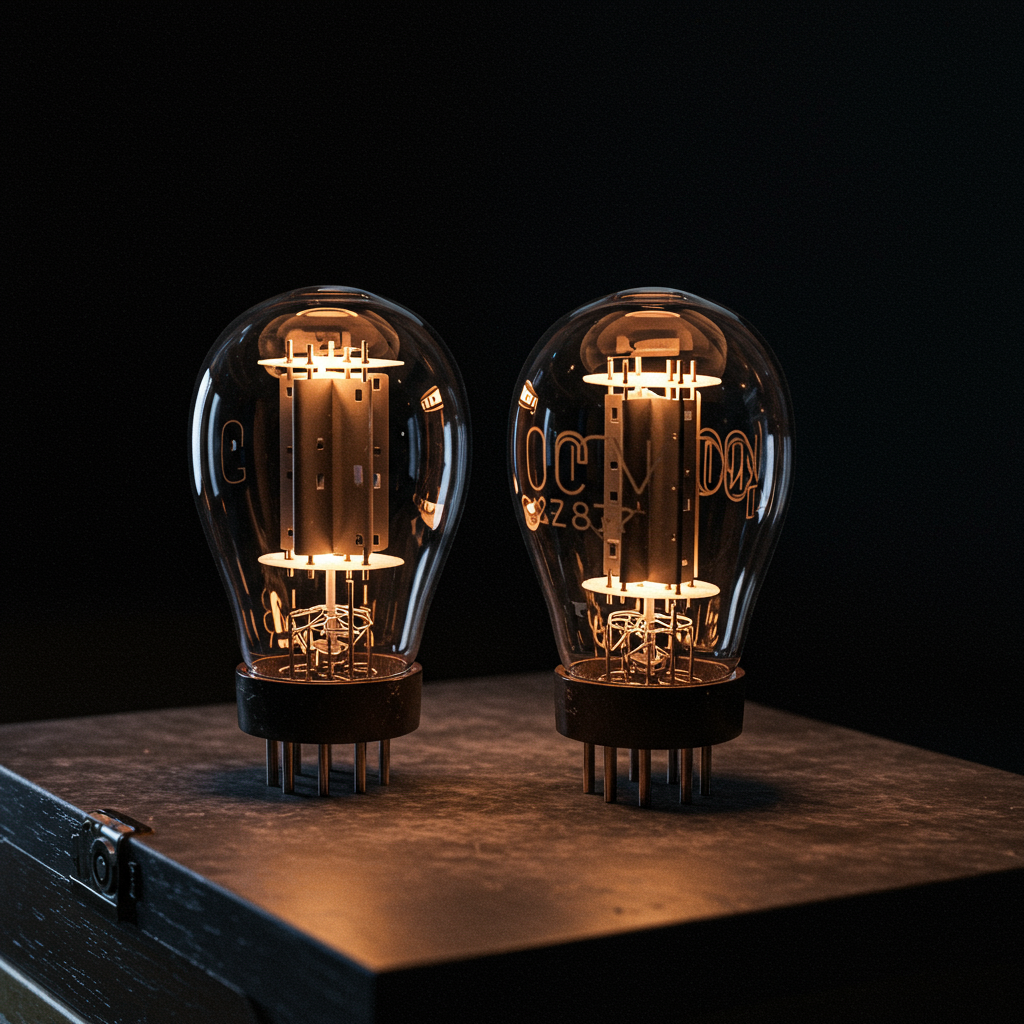
Vacuum tubes, a symbol of the golden age of electronics, are completely impractical for space. Consider that each watt of energy in orbit costs thousands of dollars, and a single …
Why recommended
- A Documentary short rated 9.1 — easy to watch in 1m.
Watch Options
Description
Vacuum tubes, a symbol of the golden age of electronics, are completely impractical for space. Consider that each watt of energy in orbit costs thousands of dollars, and a single 6Zh1P tube consumes one and a half watts just to heat the filament. This is a colossal waste of resources.
Their fragile glass casing is easily damaged during launch by vibrations of up to 10g. A single 6N2P tube can weigh up to 15 grams, which is critical given the $20,000 per kilogram payload cost. Thousands of such components would make the satellite unmanageable.
Moreover, they generate a lot of heat, requiring massive cooling systems that add weight and complexity. By comparison, the modern transistor, invented by William Shockley in 1947, weighs less than a gram and consumes microamps without generating excess heat.
While some believe that lamps are more resistant to radiation, this is a myth for most scenarios. Modern radiation-hardened silicon-on-insulator (SOI) chips outperform them in every respect, including protection against heavy-ion failures.
That's why the James Webb spacecraft and the Voyager probes, launched back in 1977, rely on compact, reliable semiconductors rather than vacuum tubes. We've moved from bulky systems to the era of nanotechnology!
Stills




Director
On a palm Studio
Cast
AI Narrator
Movie Details
Tags
Similar Movies

Sing a song by lips (without sound).

How the brain "reboots" when you stare at one point.

What happens if you send "" into space? (History).

Sea creatures living at great depths

How cheating in single-player games improves mental health.

the largest animals

How "calculators" worked before the invention of computers (human calculators).